Be a Turtle
Sneak Peek
Looking for some inspiration? Here is a sneak peek chapter from my newest book, The Upside of Falling: Connecting to the Art and Heart of Being a Writer.
Let’s Talk Turtles
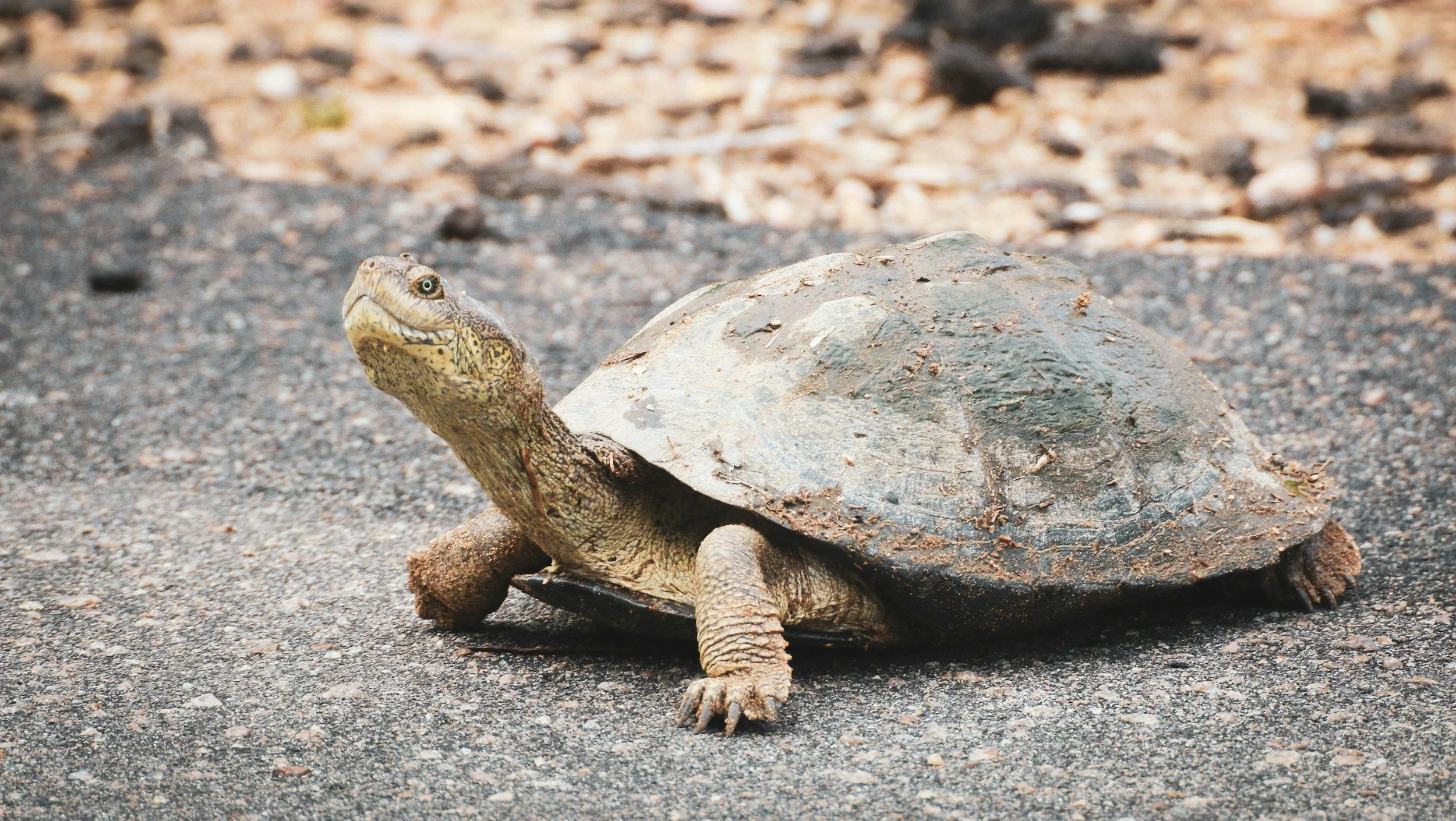
Turtles are fascinating. There are more than 350 different species of turtles. Leatherback turtles are the oldest reptiles, having been around since the dinosaurs. Turtle shells have sixty bones, and turtles don’t have ears but are not deaf. Sea turtles can stay underwater for up to five hours by slowing their heart rate to about one beat every nine minutes. They love to travel—diving depths of up to 950 feet and swimming about 10,000 miles a year. Turtles have even traveled into space—probably not their plan, but hey.
You can see the rabbit (or turtle) hole I went down researching for this chapter. That’s part of the falling—the unfolding adventure stemming from the kernel of an idea.
In this case, I came up with an idea: Turtles can travel only when they stick their necks out.
Being a writer is the same. We can’t go far or deep in our writing without sticking our necks out. We need to be vulnerable. We need to open ourselves up. As writers, we want people to feel something, to connect to something beyond our words. The only way we can evoke emotions and connections with our readers is to put ourselves out there.
Staying in Your Shell Won’t Get You Far
Don’t hide behind your words; push through them. Go as far as you can go, then go farther. Leave yourself on the page, the dark, raw, unseen parts of you. That is what people will remember.
Ask yourself, Can you go farther? Deeper? Is there more to be excavated? How far can you stretch your neck out? What’s holding you back?
I am often asked at events or book signings how I handled writing the darkest moments of my life. It wasn’t easy. First, I used a pseudonym to write the most difficult scenes. I called myself Maya. Having her as a character helped distance me from the horrific things I endured. Still, as my first book was about to come out, with all these raw, vulnerable pieces of me strewn about, I got nervous. I asked my writing group what I should do about my name.
“You guys think I should publish under the name Maya, or use my real name?”
The room was quiet. These talented writing buddies of mine were never shy with their words. But I could hear the cat breathing in the other room.
I surveyed my friends. They were different types of people writing a wide variety of books: historical fiction, romance, screenplays, satire, horror, and genre fiction. I was writing memoir, narrative nonfiction, and nonfiction. The beauty of our group was that we all had different viewpoints and whys for writing. The variety of our creations and feedback complemented one another. Because of them, I grew in my understanding of the craft and who I was with my words. They consistently helped me reach my highest potential.
After what felt like minutes, the horror writer in the room finally spoke. “Cherie, after everything that has happened to you, you’re afraid to put your name on your book?”
There it was. My invitation to stick my neck out. My story would be more powerful and reach more people because I was willing to do that. Excellent advice.
Stick Your Neck Out
If you’re struggling with being vulnerable, ask yourself what can be gained from putting your neck out and what will be lost by staying inside your shell.
It’s not just in memoir and nonfiction that we need to be like a turtle and stick our neck out. Fiction authors benefit from this just as much. A dear friend of mine—and one of my favorite writing peeps—was working on her debut novel the same time I was writing my memoir. Looking back, we both agree that we wouldn’t have finished our books and executed them as well as we did without each other’s help. She watched and supported me as I put myself out there, the honest and raw parts of my life that were hard to think about, let alone craft into a story. And I saw her stretch herself writing an outlandish but artfully written paranormal romance. Her book explored ancient aliens, conspiracy theories, UFOs, Sumerian cuneiform texts, the meaning of life, and a crazy human-alien romance. Is this the most popular topic? Nope. Relatable to everyone? Hardly. I hadn’t heard of much of this until I met her. But she was all in. No holding back. She put herself, her beliefs, and her ideas out there. We even promoted our books together at festivals with an Aliens and Inspiration booth. Our books, intentions, whys, and audiences couldn’t have been more different, but I am a better writer for knowing her. What a gift it was to see someone so dedicated to their craft.
Slow and …
Now, you may be surprised that I didn’t mention that turtles are slow, since that’s generally what most people think of when they talk about turtles. Sure, they are slow, but it’s their pace that’s important. Steady.
One of the challenges of being a writer is that writing is a big investment of our time. Writing is generally a slow process. Even if you were Stephen King, you could write only a couple of books a year.
Quality writing takes time, often a long time. We can feel impatient, like we are waiting for something to bloom. Because we are. If we rush or try to move through it, we evolve past it. When we slow down and sink into the flow of our process, we glean much more. Our steady pace feels not so slow. You know that feeling when you are in the moment and time ceases to matter? You are blissfully lost in the flow. You lose track of time. You don’t notice anything other than the precious moment in front of you. That is the beauty of a steady pace. You are enjoying your surroundings and the world you are in. You don’t want to rush. You like where you are.
I am a Recovering Fast Mover
I used to move so fast I would often hold my breath and rush to and from each and every activity. I was the hare, or the Energizer Bunny. I kept going and going. But what I was really doing was burning out. Instead of being more productive, I was generating stress, anxiety, and lapses in focus. When I got really sick and was bedridden, I was forced to learn the art of slowing down and doing nothing. Over time, I saw the benefits of moving slower. We think speed and moving fast are always better. They’re not. When you slow down, you become more present, which increases clarity. It enables you to appreciate the view and the sharp details in front of you, and it will help you make more intentional choices.
When I started embracing my inner turtle, my creativity skyrocketed. I stopped rushing, and my mind had space to wander, making unexpected connections and generating new ideas. Slowing down helped regulate my nervous system, lowering stress and bringing me a sense of calm. I became more productive. My focus was better, and I worked more efficiently. Rushing had led me to exhaustion, whereas a steady pace led me to improving the quality of my writing. I also gained a deeper sense of fulfillment because I was no longer chasing my goals but appreciating the slower, more peaceful time as I wrote.
Even now I am reminding myself to slow down. It is a daily practice. I often ask myself, How can I slow down and make more easeful choices for my writing and my life? Slowing down and being steady may seem counterintuitive, but try it. You may be amazed just how good it can feel.
Remember, turtles may seem slow, but inch by inch, they are getting where they want to go, sticking their necks out and gifting the world their stoic and strong presence.
With much fondness, for you and your inner turtle,
